A story in eight parts

GOHAN
Gohan means rice, and it means a meal. Japan grows 37% of the calories it eats. This is where the rest comes from, what's changing, and how a few valleys could grow more.
WHERE IS JAPAN'S FOOD HEADED
Part.01
Calories grown at home
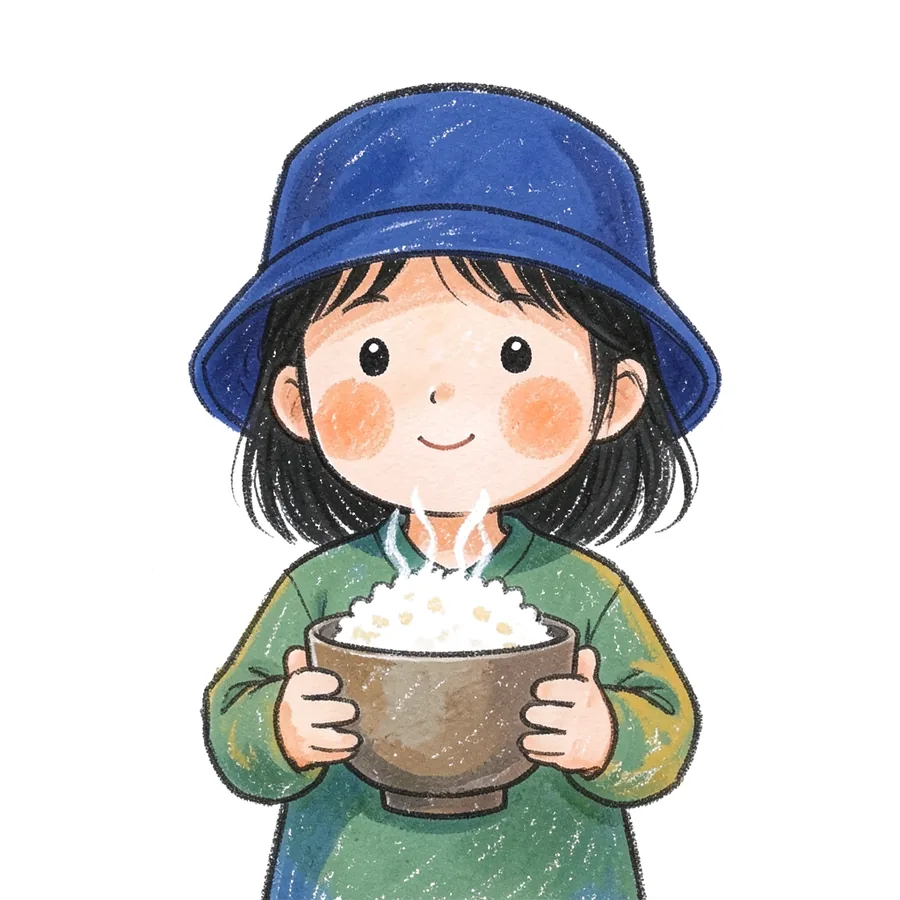
Japan grows 37% of the calories it eats.
Of the 2,237 kcal a person eats each day, 830 are grown at home. In 1965 it was 73%. Rice is nearly all Japanese; most of the wheat, soybeans, cooking oil and animal feed comes from abroad.
When I was a girl, nearly everything on the table came from around here.
Grandma Fumi, Uonuma
SHORTAGE
Part.02
The rice shortage
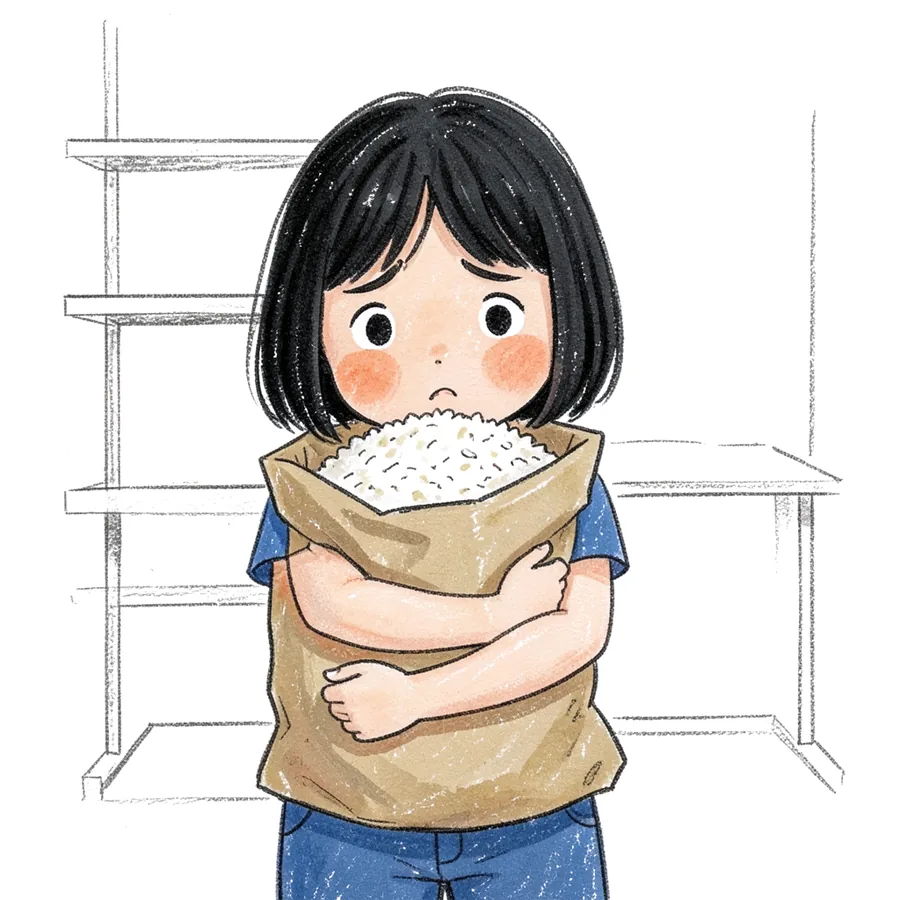
In 2024 the rice ran short.
A hot summer and thin stocks emptied the shelves. In 2025 the price of rice rose 67.5% in a year, and the government released most of its reserve. Two big harvests have brought prices down since.
¥2,837 for 5 kg at the supermarket this week
Part.03
The farmers
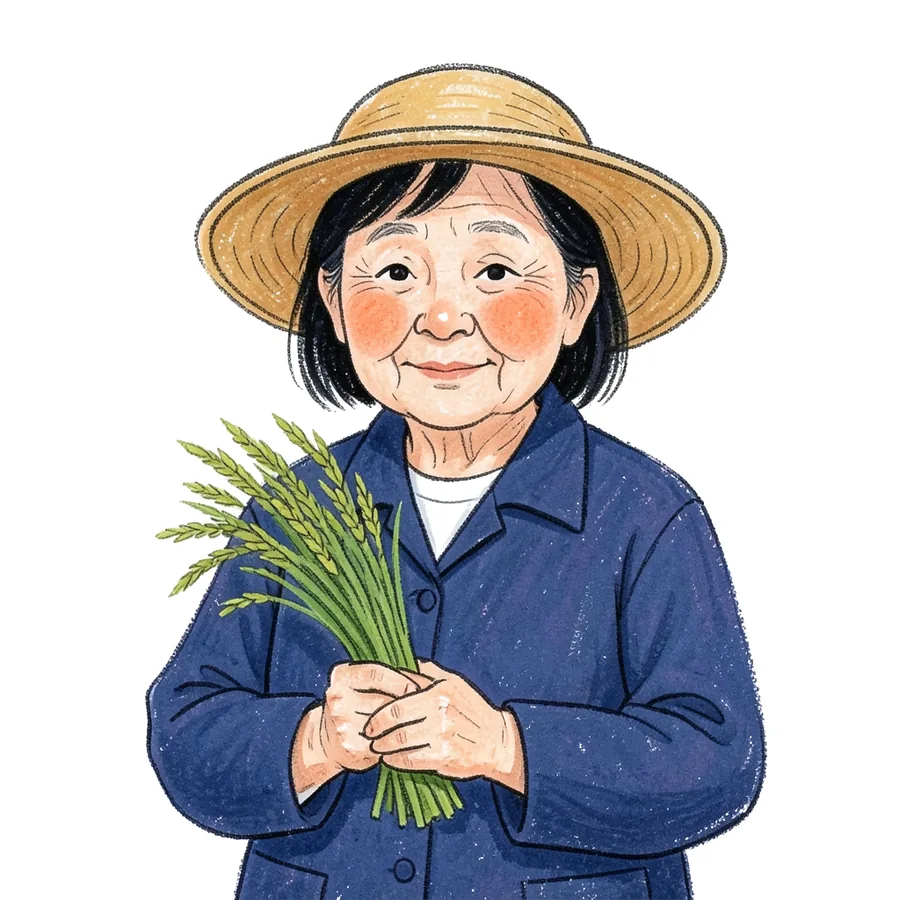
The people who grow it are retiring.
Fewer than a million core farmers are left, at an average age of 67.7, and seven in ten are past 65. In 2020, 71% of farms had no successor lined up. MAFF expects about 300,000 core farmers by 2045. Each year about 24,000 hectares fall out of use and only 8,000 are brought back.
My knees aren't what they were, and the Tanakas next door are past eighty. When we stop, who plants?
Grandma Fumi, Uonuma
HOTTER SUMMERS
Part.04
The heat
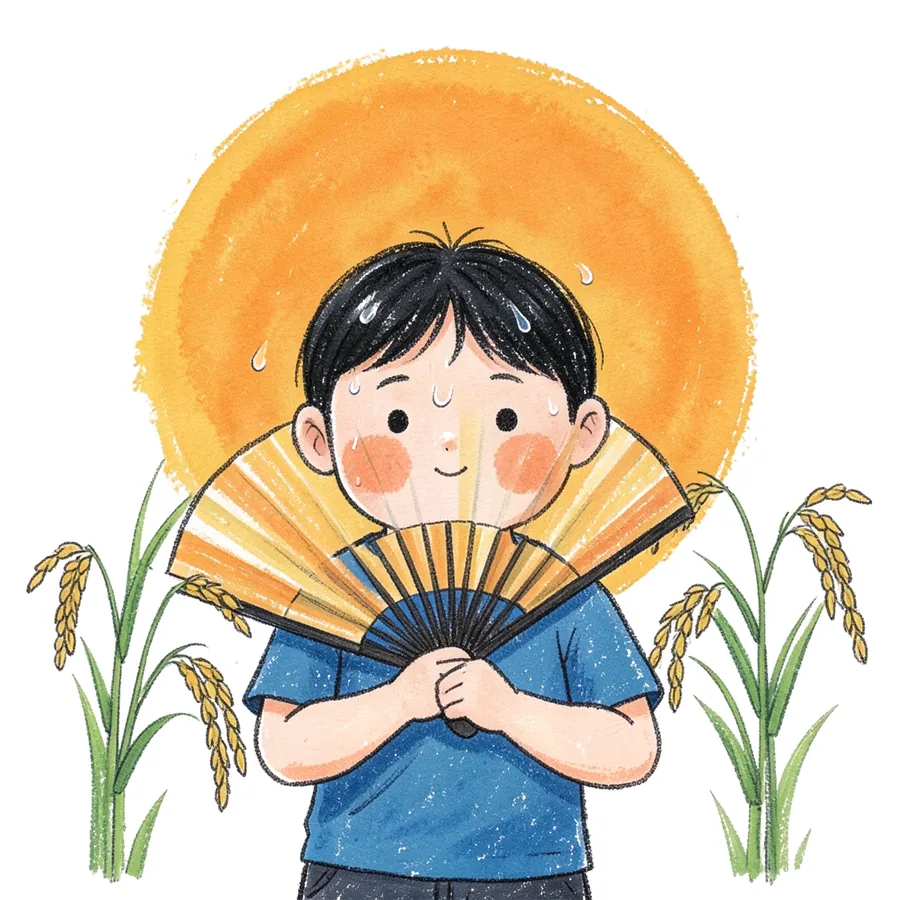
Summers are getting hotter.
Heat while the grain ripens turns rice chalky. In 2023, the hottest summer on record, only 60.9% of Japan's rice made first grade; in Niigata about 14% did. On the paths JMA and MEXT lay out, Japan is 0.9 to 2.4 °C warmer than 1991–2020 by 2060.
Heat-tolerant rice like Nijinokirameki kept its grade in 2023. Breeding helps, but it takes years.
Kon, Inari Lab
Part.05
The world
The world will need half as much food again.
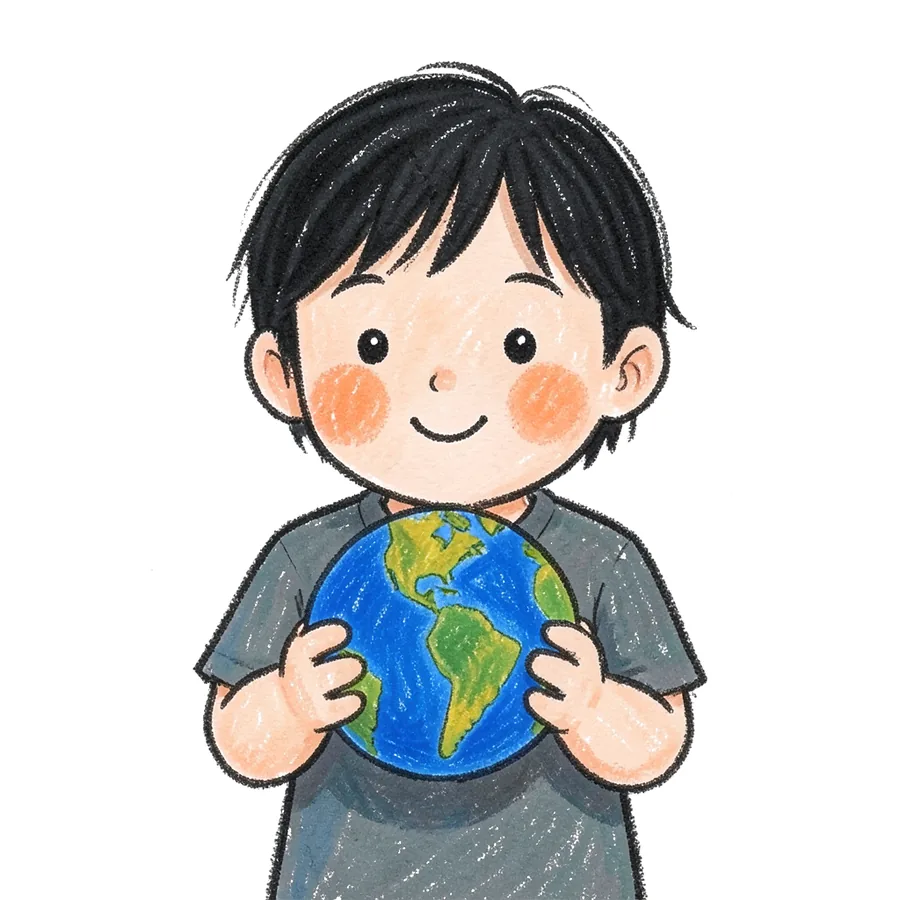
There will be 9.66 billion people by 2050, and farms must grow almost 50% more than in 2012. 645 million people went hungry in 2025. Japan buys most of its calories abroad, so every field it keeps growing leaves more food for everyone else.
Part.06
2050
Where it's headed.
gohanSim's projection, built from JMA's warming paths, IPSS population estimates and MAFF trends. Not an official forecast.
IMO
Part.07
Another staple
Planted for imo, Japan's land could feed everyone.
People a hectare feeds for a year
Japan has leaned on imo before. Aoki Kon'yō spread sweet potatoes after the Kyōhō famine of 1732, and potatoes and sweet potatoes carried the country through the hungry years after the war. Eating more of them again, and growing them in spare paddies, is one way past 45%.

Part.08
What would change it
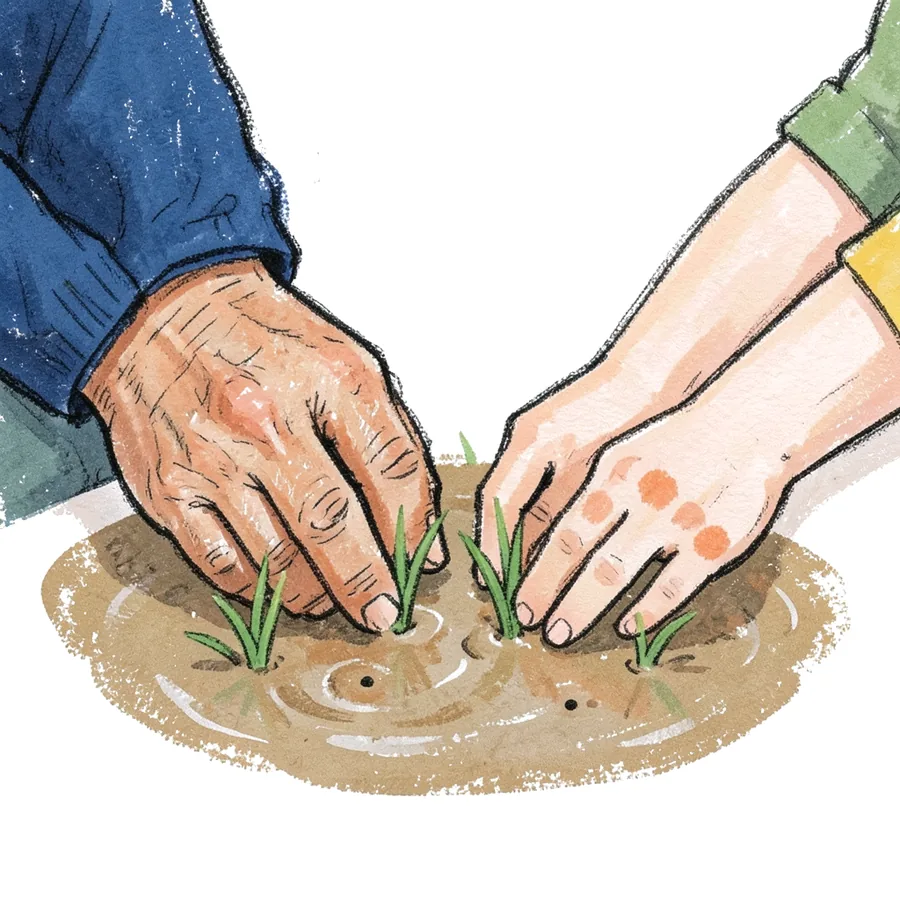
What would change it.
The game's model looks for the cheapest steps that lift 2050 the most, using only real programs and tools that exist today. Each one is something Japan is already trying.
What anyone can do
- Eat rice and food grown in Japan. Rice is the one staple Japan grows almost all of.
- Join a planting or harvest day. 57.1% of households did in FY2025; the target is 70%.
- Back young farmers: a farm crowdfunding campaign raises ¥0.5–1.5 million, often paid back in rice.
- Send hometown tax to farm towns. Donations reached ¥1.33 trillion in FY2025, and rice is the most popular gift.
- Stay on a farm. Farm stays counted 8.68 million nights, and some guests stay for good.
- Put Japanese sweet potatoes and potatoes on the table in place of some bread and noodles. Their fields feed more people per hectare than any other staple.
The game gohanSim
THE GAME
Take over a rice farm. Help feed the world by 2050.
In gohanSim, Grandma Fumi offers you her rice farm in Uonuma. Make your farmer, run a co-op on real weather and prices, turn spare paddies into imo fields, build a commons where people live and farm together, set up a room where AI agents work while you farm, and play with up to three friends.
 Coming soon on theApp Store


TAKE OVER A RICE FARM
New in 0.7
What you can do on the farm
 Fumi's farm, your farmer
Make your farmer, take over Grandma Fumi's paddies in Uonuma, and work them on real weather and prices.
 Imo fields
Turn spare paddies into sweet potato fields. They feed about 1.5 times as many people per hectare, for three times the work.
 The commons
Tiny houses, an open kitchen, a bathhouse and coworking below the fields. Residents farm half the time and everyone helps at planting and harvest.
 Your room, and its AI agents
Furnish your room. Mini computers on your desks run agents that sell, plan and watch the weather while you're out in the paddies.
 Friends on the farm
Farm the same valley with up to three friends, nearby or online.